
Header image: Sir Peter Scott was often seen at the studio window of his house, looking out on the Rushy Lake
When you read about threats to our planet and the life on it, Scott’s studio is where much of our understanding of those challenges – and how we might overcome them – began. On the table by the window overlooking the Rushy Lake, the classification of species according to threat level was conceived and codified. Scott was instrumental in creating the International Union for Conservation of Nature’s Red List of species, which continues to prioritise world conservation efforts today.
To inform the Red List, the room was the nerve centre of numerous expeditions across the world to study wildlife populations. Specifically, it’s where plans were hatched to save species from extinction, ranging from the nene in the 1950s to the Madagascar pochard today.
This special room was also pivotal in global agreements that drive modern conservation today. The international Ramsar Convention on Wetlands of International Importance is so-named because, while visiting Slimbridge in 1971, Iran’s environment minister invited WWT and the convention’s founders to inaugurate the convention in the city of Ramsar.
In 1961, Scott was a founding member of the World Wildlife Fund. As its first chair, he drew the original WWF panda logo in his study. It sits alongside the paintings, sketches, war memorabilia and medals that make up his incredible life story.
Many people who knew Scott as a broadcaster will recognise the huge study window overlooking the Rushy Lake where he was often filmed. In 1953, the BBC’s first-ever live nature broadcast came from Slimbridge. It was so successful that the BBC built a replica of the room at Alexandra Palace in London for future broadcasts, before moving its Natural History Unit to Bristol, where it could benefit from Scott’s input.
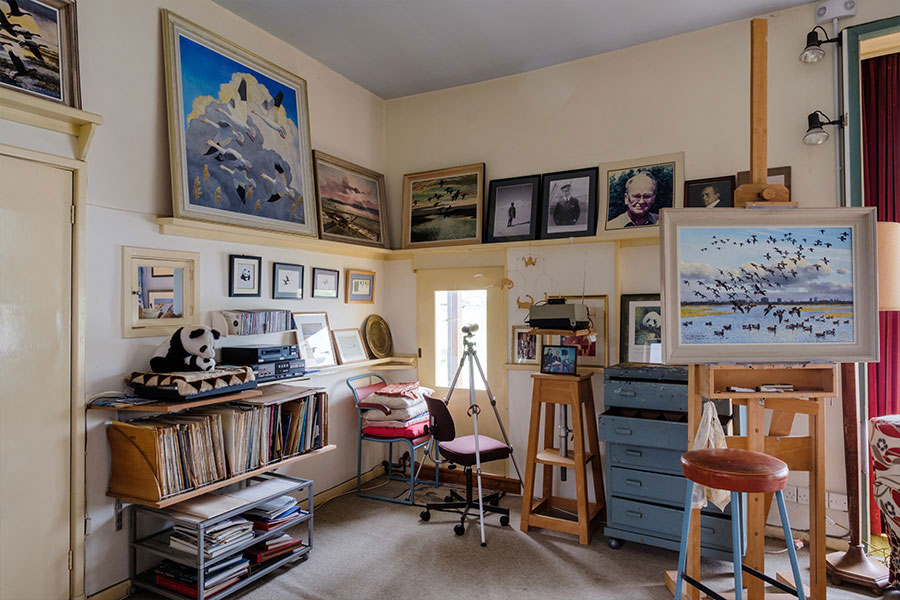 Inside the Scott House Museum at WWT Slimbridge
The study is also the birthplace of all but one of WWT’s 10 UK wetland reserves (Scott chose Slimbridge as the location for his Wildfowl Trust before he moved to Gloucestershire). This is poignantly highlighted by Scott’s final painting of the London Wetland Centre, which has stood on the easel in the study since his death in 1989. It was later completed by his great friend Keith Shackleton, and it’s a perfectly accurate view of a wetland that wasn’t created until more than a decade later.
You might expect this global conservation landmark to be a grand and imposing building, but first and foremost it was a family home. The pictures of the children, the books and even a Post-it Note in the kitchen detailing the dog’s dietary requirements remain unchanged. At the Scotts’ request, I once used the study as my office and spent seven incredibly privileged years carefully touching nothing.
Scott’s home is a window into the past, a time capsule of life in the 20th century, when watching live wildlife through a window was more inspiring than any TV documentary. This great man not only saw how humankind’s impact on our natural world would continue to grow, he also predicted that our passion could save it.
That’s why WWT’s wetland centres aren’t private nature reserves. We want you to get close to wetlands and enjoy nature. The Scott House Museum is now open, and I know this great man would have loved to welcome you – our incredible members – to visit.
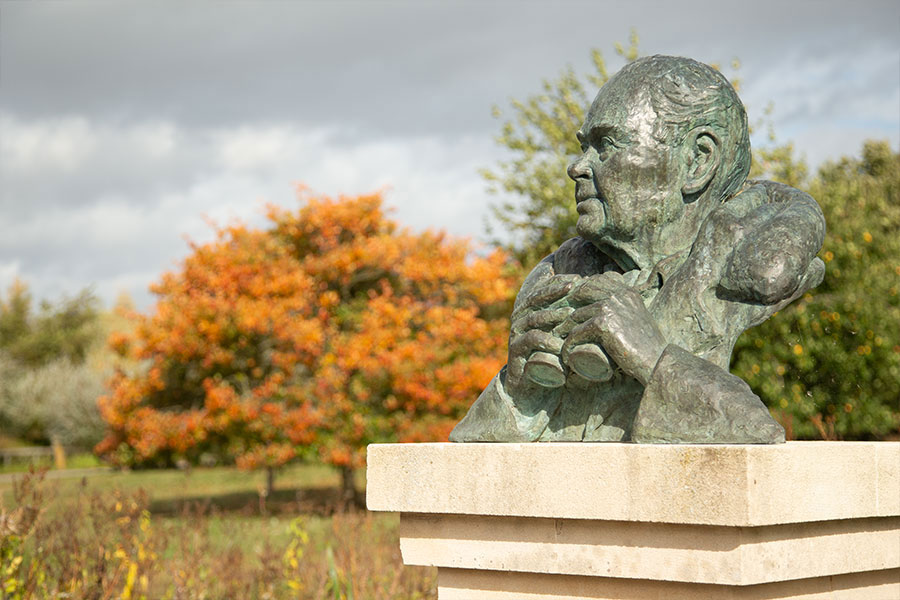 The statue of Sir Peter Scott at WWT Slimbridge.
