
The audience in a packed room listened attentively as WWT Head of Conservation Science Geoff Hilton spoke about critically endangered spoon-billed sandpipers in faraway Asia. Geoff ended his talk with something different to bring the subject closer to home. He put up a picture of a local wet meadow and played a soundtrack of lapwings, curlews, redshank and snipe.
"The response was incredible," he says. "People suddenly became very animated and began saying 'I remember that', and 'Why don’t I hear that sound anymore?' I’ve never had a reaction like it."
Lost wetlands
In the course of Geoff’s lifetime, the fortunes of the wading birds of wet grasslands have changed and changed again. In his boyhood, agriculture was claiming and draining meadow after meadow: the figure of 95% lost may be an underestimate.
Today, we have lost most of the meadows and the few that remain are in conservation hands, or under the stewardship of farmers who are paid to manage them specifically for wildlife.
The Gloucestershire-born youth was goose crazy: he would visit Slimbridge and see 6,000 or more white-fronted geese wintering there. But climate change has altered the character of Slimbridge itself. Milder winters have meant that the geese that once journeyed here from northern Europe and provided a spectacle for the teenage Geoff, now stop short in German or Dutch refuges. Six thousand birds of yesteryear have dwindled to a couple of hundred today. "Our management has changed accordingly," says Geoff. "There’s no point trying to create perfect goose pasture for a species that isn’t going to turn up. So we’ve turned some of our key fields into wader heaven, and every winter we welcome thousands of lapwings, golden plovers and other birds."
The right balance
If this is heaven, then it’s hellishly difficult to achieve. Senior Reserves Management Planning Officer Lauri MacLean describes managing for waders as "one of the most important things we do on our sites. But it’s a juggling act." In spring, breeding lapwings like areas of short grass with just a few tussocks, where their chicks – out and running within a few hours of hatching – can shelter. The lapwings need clear sightlines to watch for predators.
Redshanks, the so-called 'sentinels of the marshes’ peeping their annoyance at intruders, prefer short grass and a few more tussocks. Snipe can’t cope with short grass at all. They want to stay embedded in rushy vegetation – a soggy jungle where they can sit still and let their camouflage do the rest. It’s obvious that no single type of management suits all species; the individual birds with their differing requirements need a mosaic within a mosaic of habitats.
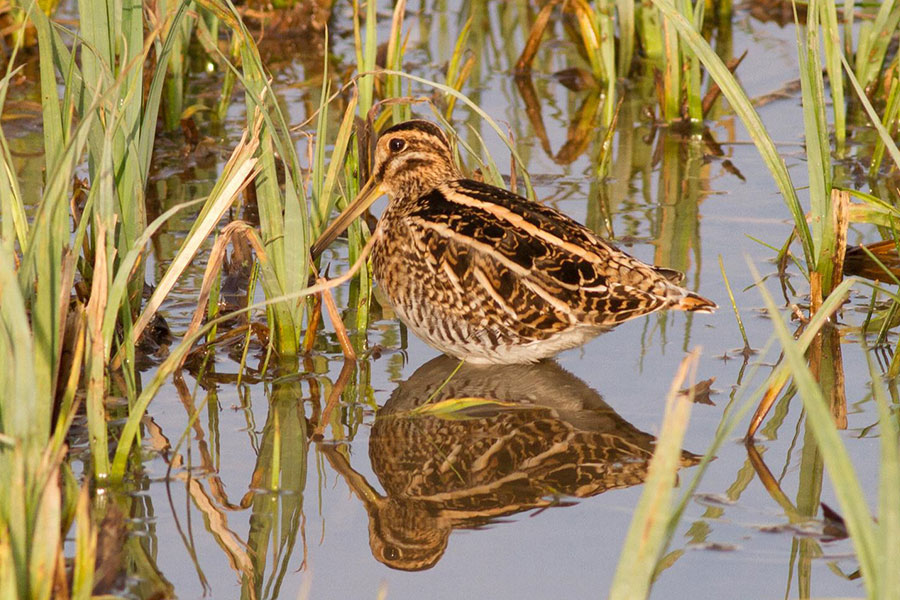
Wetland oracles
Come the autumn, our reserve managers are planning for the present and the future all at once. They need to make their fields wet for wintering waders, so they are forever opening and closing sluices to keep the water levels just so.
Then in the winter, the reserve’s lawnmowers make their entry too – herds of cattle that graze the grass to heights that must be right for breeding birds the following spring. Too many hooves might damage the ground; too few cows might mean they are unable to check thick growth that would prevent flowers, such as marsh marigolds, ragged robin and lady’s smock, from breaking through. Spring flowers attract insects, and chicks eat insects. And the cattle need to be taken off the fields before the patter of tiny feet is at risk from blundering hooves. A juggling act indeed.
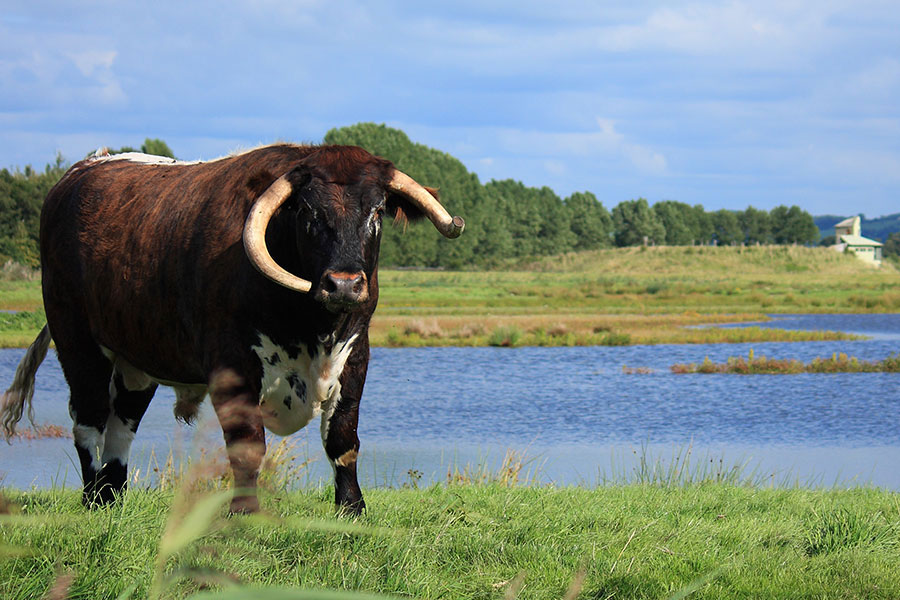
Winter wonders
There’s no question that hard work throughout the year is paying dividends, as anyone who visits our reserves will see for themselves. Every one of them will be brimming with birds this autumn and winter.
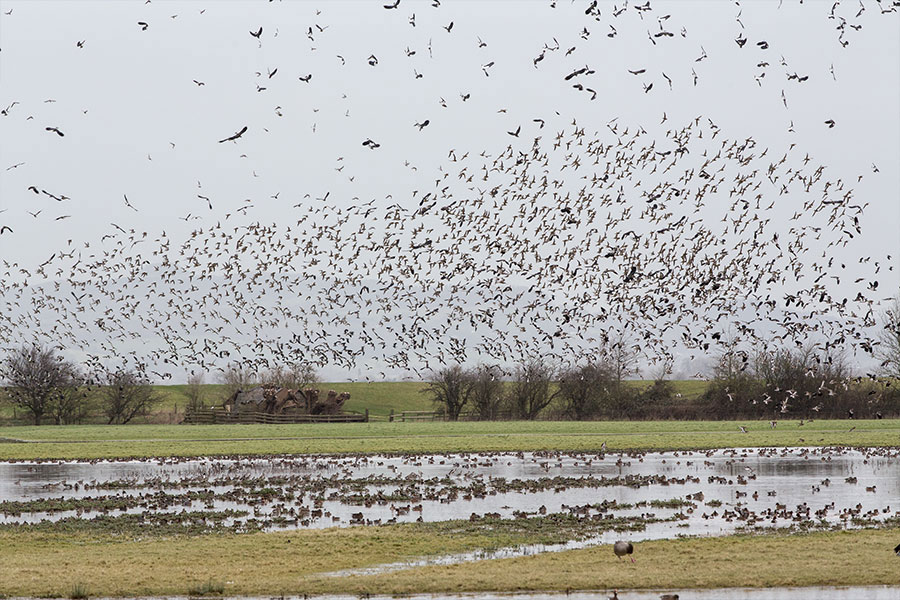
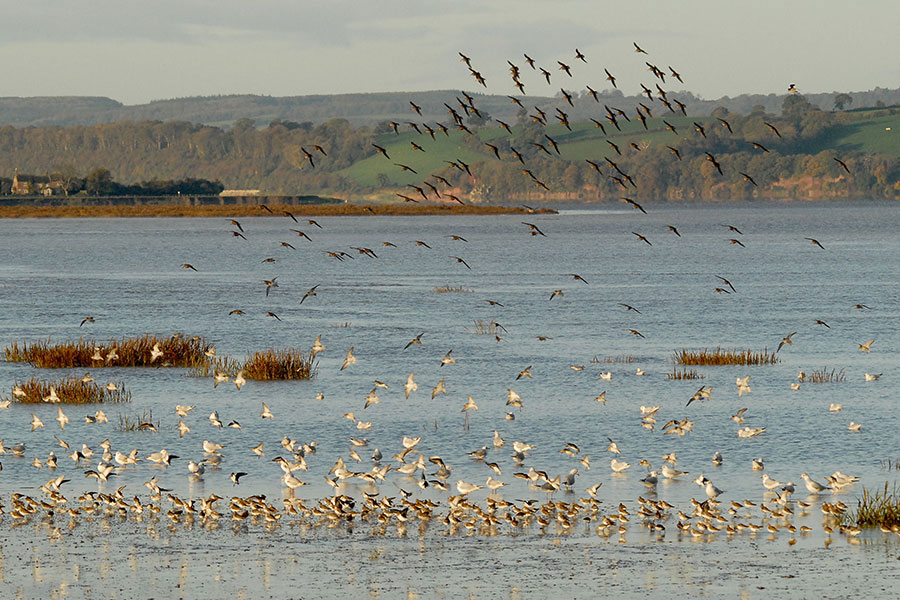
As Geoff sits at his desk, he can look out of his window to see 2,000 or more lapwings and golden plovers clouding the sky, rising up from the meadows when a passing peregrine spooks them. Visitors sitting in the observatory at Caerlaverock can look down on thousands of godwits and plovers dabbling about in the fields and the saltmarshes. At Castle Espie, carrot-billed oystercatchers line up on the foreshore. Most incongruous and wonderful of all is the regular sight at Washington, where 1,000 curlews negotiate the urban conurbation at the end of the day to drop into this wetland oasis for the night.
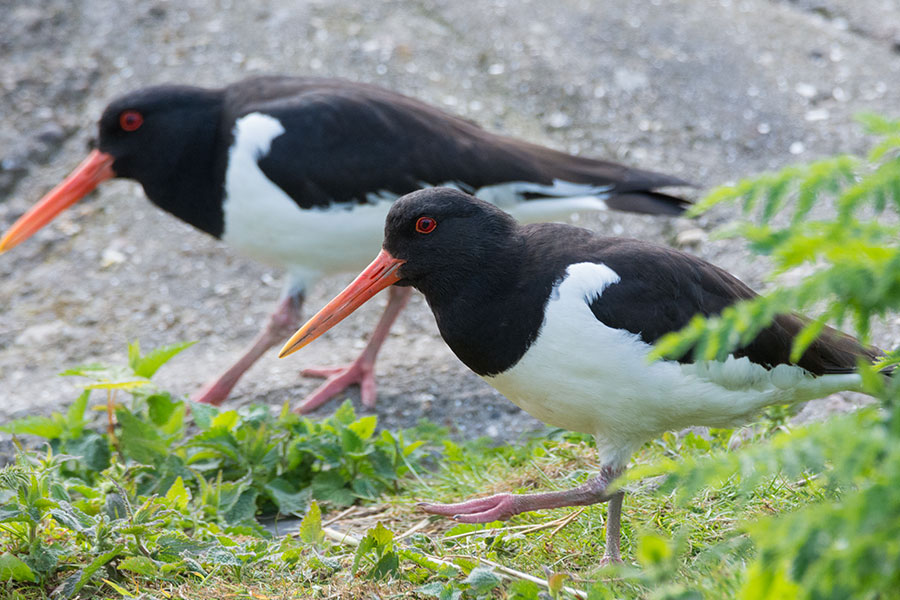
The pattern of growing winter numbers is mirrored with breeding successes in spring. At Arundel, Martin Mere and Washington, the meadows are bigger and better for waders, thanks to small-scale restoration projects. At Welney, disaster struck when the washes became saturated, a foretaste of erratic climate change flooding to come.
The decision to create alternative breeding places in neighbouring fields has paid off – three pairs of black-tailed godwits raised nine young last year. It is one of only a tiny handful in England where these birds breed – every chick counts. Avocets and oystercatchers breed at Martin Mere; lapwings and redshanks are breeding at the London Wetland Centre. It’s probably the first time in over a century that they have raised young so close to Westminster. Miracles can happen.
But it’s not enough. WWT and other conservation organisations may be managing the remnants of wet grassland well, but they are only remnants, surrounded by fields slashed with drainage ditches to drain the land dry – fields that are hostile to waders.
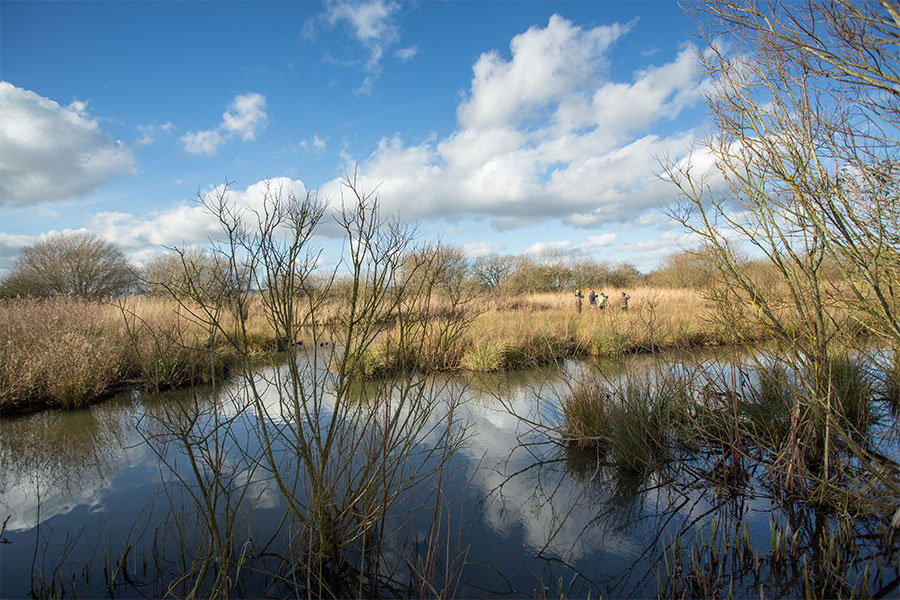
Red list blues
With spectacular winter displays at WWT reserves, you could be fooled into thinking that waders are booming. But the breeding figures nationwide speak for themselves. Lapwings, curlews and black-tailed godwits are still on the Red List of Birds of Conservation Concern; redshanks and snipe are on Amber. Wading birds gain strength in numbers and they simply cannot build up numbers sufficiently within tiny fragments. Lauri appraises the situation realistically: "We have to stop thinking of our sites as little isolated pockets in the countryside."
Our new conservation strategy, published in the spring, cemented a change in thinking. Geoff explains: "We have a deliberate aspiration to create bigger and better wetlands, working out from our own reserves into the surrounding areas. We are now actively looking for opportunities to create wetland landscapes outside our reserves, entering into partnerships with farmers and other landowners. In some cases, these could be very small-scale – creating or restoring ponds or ditches. In others, we could be looking at grand-scale projects to create or restore wet grassland."
Searching for solutions
Coupled with the drive towards bigger habitats is the search for scientific understanding and solutions. Nowhere is the need greater than for the curlew, the best-known and most striking of all waders, famous for a call that sounds both exultant and mournful. It has plenty to be sad about, for the curlew is in serious decline as a breeding species… and experts don’t really know why.
The fate of our wetland waders will be driven by people who are driven to help them – and if the calls of lapwing, curlew, redshank and drumming snipe stir half-forgotten memories, so much the better. Geoff has extra motivation from something closer to home. "Snipe no longer breed in my home county of Gloucestershire. If we got them back… well, that wouldn’t be a bad thing."
Getting it right
WWT’s Lauri MacLean explains how we make sure our reserves stay in good shape for waders year round.
Early autumn
Cattle are brought on to meadows to ensure grass will be in peak condition for breeding next year. Good grazing will result in a greater diversity of flowers, and hence more insects for chicks in the spring.
Autumn
Meadows are kept marshy for wintering waders, thanks to sluices that hold water in the fields and keep the levels high.
Late autumn
The number of cattle is increased or reduced, to ensure grass heights will be just right for spring breeding.
Late winter
Cattle are removed altogether, or reduced in number, to avoid trampling or disturbing nesting birds.
Spring
Water levels are controlled to keep meadows wet, but not flooded.
Summer
Water levels are allowed to fall. A hay cut is taken only after the birds have bred; doing so during breeding could result in the eggs or chicks being destroyed.
Get wild about waders
Autumn and winter are a great time for waders, so don’t miss out on this spectacle at your local WWT centre. Not a member? Book online and save time on arrival.
Plan your visit