A childhood in nature
"When I was a boy growing up in Gloucester, Slimbridge was the best place to watch birds, especially waterbirds, in the area. Today, this is still true, largely because of WWT’s imaginative management of the reserve and ability to adapt to changing circumstances (the land used to be managed mainly for swans and geese, but now it’s also managed for waders).
"As a 14-year-old, I joined the Severn Wildfowl Trust, as WWT was known back then. In the old days, you could join as an associate member for 10 and sixpence. And for that, you could come down to Slimbridge on a Sunday and ‘the warden’ (a terrifically impressive figure with a tweed jacket and a great big pair of ex-naval binoculars) would take you down the Dumbles to see the geese – a privilege granted only to members."
Reflecting on the legacy of Sir Peter Scott
"I remember listening to Peter Scott on the BBC Home Service on steam wireless. On a Children’s Hour programme in April 1955, Scott said he’d just come from Slimbridge, where a very rare little egret had been seen, the first-ever record for Gloucestershire. The next morning I jumped on my bike and pedalled all the way from Cheltenham to Slimbridge. I never saw the little egret. But in the past 20 years, this Mediterranean species has spread all over the UK and is now seen regularly at WWT centres.
"From 1974 to 1990, I worked at the headquarters of the International Waterfowl & Wetlands Research Bureau (IWRB, now Wetlands International) at Slimbridge. I often consulted Scott on international issues. I remember that he helped us to write a letter to the Yugoslav authorities expressing concern about a wetland that was under threat from a dam being built upstream. I heard recently that, though it is smaller these days, the wetland still has breeding spoonbills.
"What I remember most about Scott is his voice: soft and mellifluous, yet authoritative.
"Scott always talked about the ‘four pillars of conservation’ – research, education, recreation and conservation. I think that this ruling concept is one of his greatest legacies."

Slimbridge and WWT
"Slimbridge was the world-leader in research on waterbirds during the 1960s and 1970s, not least because theories and discoveries could be tested here thanks to the living collection of birds. During my travels with IWRB and Ramsar, I met many people who had visited Slimbridge as young aspiring scientists. In the 1980s, the centre’s education facilities were the envy of everyone I knew.
"WWT is brilliant at enabling people to see and enjoy birds without disturbing them."
Protecting the curlews
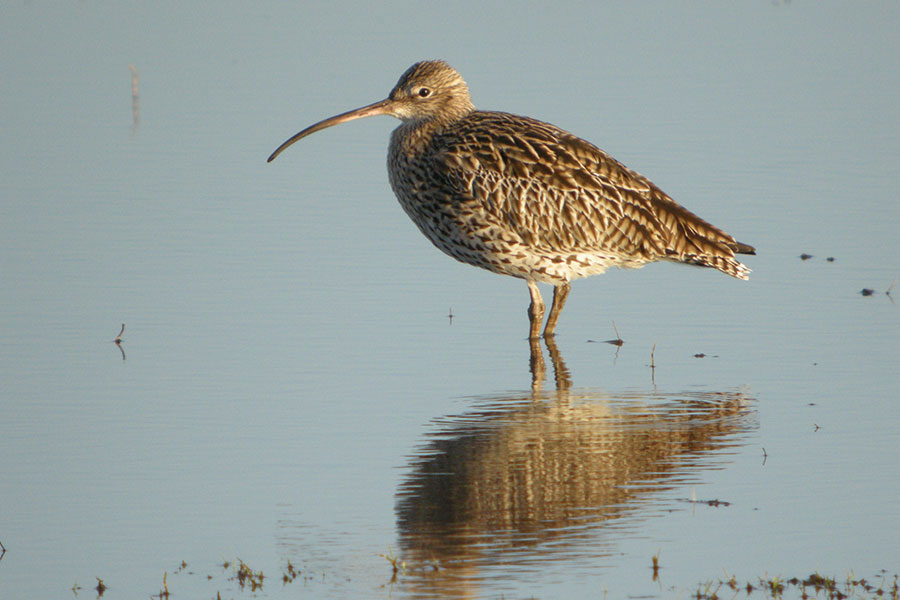
"Today, I help monitor wild birds. I love being out in the field, circled by curlews, and watching what they’re doing through a telescope.
"The most fascinating time is early in the season, when the curlews return to Gloucestershire and you can see breeding pairs claiming a territory, chasing each other and interacting with other pairs.
I want to help protect the curlew’s wild habitat, and the other flora and fauna that lives in Gloucestershire, because it’s part of the region’s natural heritage. I hope people will be able to enjoy seeing these amazing birds, hearing their iconic calls and observing their fascinating behaviour for many years to come."