
I can scarcely remember a time when spoon-billed sandpipers weren't constantly on my mind. Even when I was knocking the snow off the birds' aviaries in winter, I was thinking 'Will this be the year they breed?'
WWT Slimbridge is proud to be home to the world's only captive breeding population of these critically endangered waders. But it took three years of encouragement before our flock of 23 birds even attempted to breed. And then, our first two chicks failed to survive. We were devastated.
But it's from such tragedies that we learn and improve. So in 2017, we decided to trick the spoonies into breeding earlier in the year. In October, we began manipulating the day length in their aviaries to bring them into breeding condition six weeks early. If successful, this would mean they would breed when the weather is cooler.
After all, our summers are hotter than those they are used to in Arctic Russia. Could this be why they weren't keen on breeding?

The waiting game
We watched anxiously. Then, almost six weeks early, the spoonies began to acquire their summer plumage, turning from silvery grey to stunning reds and chestnut browns. We introduced them to prospective mates, moved them to breeding aviaries for privacy, and left them to their own devices. All we could do was wait. Each evening, I would spy on the birds from my living room, thanks to the CCTV in their aviaries. I cheered as the males began displaying to the females, performing nest-scraping displays for their approbation, and generally following them around. It was very exciting. But we'd reached this stage before and no eggs had been produced, so I tried not to get carried away.
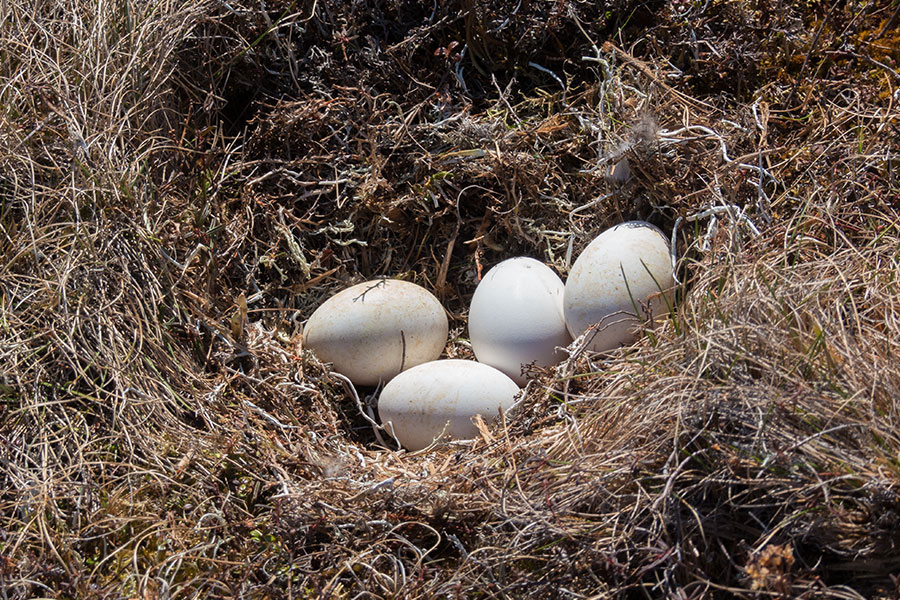
Eggstatic!
Then, on 28 April 2018, I found our first egg. I was so overwhelmed, I had to sit down and shed a few tears before I could let the rest of the team know. We had no idea if the egg would be fertile, but over the next two weeks, two females laid a total of seven eggs (they lay on average one egg every 36 hours, and usually produce clutches of three or four eggs).
We artificially incubated the eggs to give them the best chance of survival. Incubation takes around 21 to 23 days, and all day and all night I checked the incubator temperature, making tiny adjustments as the room temperature and humidity rose and dipped.
 Newly hatched spoon-billed sandpiper chick with eggs
Time to hatch
On day 21, one of the eggs 'pipped'. The chick made a tiny hole in the shell with its egg tooth, and began chipping its way out. This took an agonising 48 hours. But in the early hours of 30 May, I was privileged to watch the chick hatch. It was an emotional moment - the result of seven long years.
On hatching, the spoonie was no bigger than a bumblebee and weighed just over five grams. It was perfect. I moved the chick to an artificial brooder to rest and dry off, and gave it sips of water every few hours. After just 24 hours it was up on its feet, hunting for insects and calling. We fed it fruit flies and hatchling crickets, and played brood calls to comfort it.
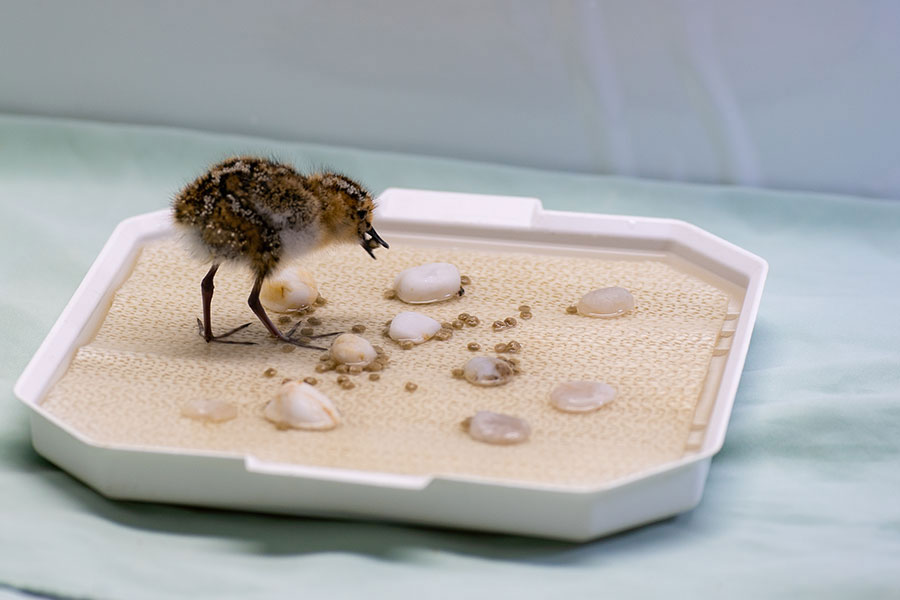
Growing quickly
Over the following week, the spoonie enjoyed round-the-clock care. It was fed every three hours, its temperature monitored and its growth rate scrutinised. After eight days I moved it outside, and by day 11 it was in a large pen full of fresh grass and water. On day 23 it took its first flight, landing safely. It looked very pleased with itself. And yes, there were more tears.
But just as we were about to officially announce news of the world's first captive- bred spoon-billed sandpiper, it died of a tragic flying injury that couldn't have been prevented.
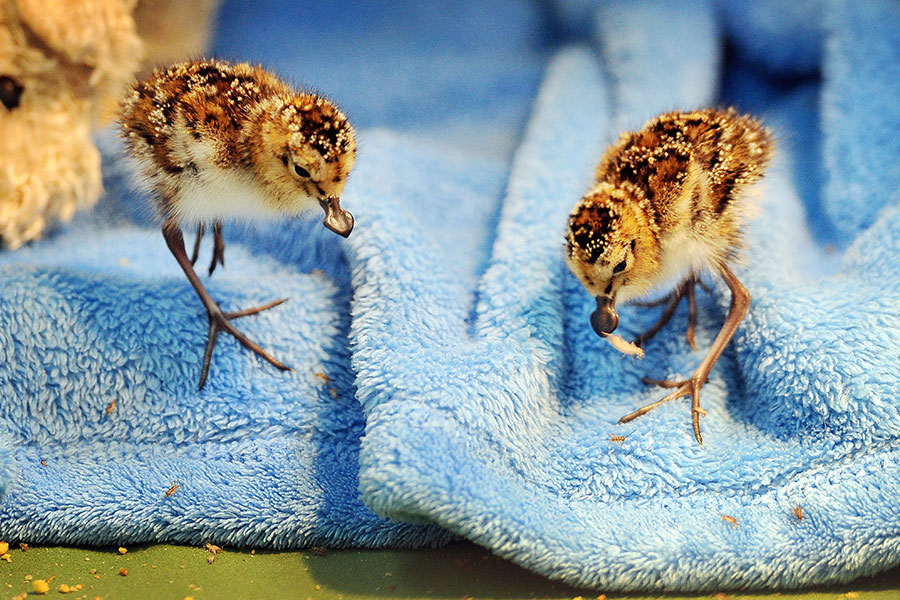 Spoon-billed sandpiper chicks born at Slimbridge as part of the Spoon-billed Sandpiper Project
Looking ahead
Despite this sad outcome, there were many positives to build on from this significant development. This chick represented the future of its kind, should anything happen to the wild population. To say it was special is an understatement. Yet, despite the death, I remained confident that the first-class expertise and professionalism of the Slimbridge team would bring us further successes in the future.
And it did! Today, two spoon-billed sandpiper chicks have been hatched and reared to adulthood at WWT Slimbridge. It really is just the start.<
Carefully does it!
Raising such a precious chick requires absolute attention to every detail...
- We replace the spoonies' real eggs with specially crafted dummy or 'pot' eggs. This allows us to incubate the eggs while mum completes her clutch.
- When we collect the eggs from the nest, we 'candle' them to check for damage, and again at around seven days to assess fertility. We then candle fertile eggs every three or four days to check on their development during incubation.
- Every few days we weigh the eggs to make sure they are losing the right amount of weight (as the embryo develops, moisture evaporates through the shell to give the chick space to move around ahead of hatching). We aim for around 15% weight loss over the incubation period.
