
Some of our visitors may think the rarest thing they could ever see at a WWT reserve is a Chief Executive. But, as for many of our wild inhabitants, wetlands are my natural habitat. I’ve been involved with them my whole working life and, much as I enjoy my role in the boardroom, I can’t wait to get back outdoors to the day-to-day joys of being surrounded by nature.
It’s a great privilege for me to be able to visit wetland sites across the country – not just our own WWT centres but also landscapes where we are working with our partners to restore and create wetlands. The UK’s wetlands are some of our most precious national treasures, protecting us from climate change, biodiversity loss and a decline in our own wellbeing. One of my main aims as Chief Executive is to create and foster partnerships that will enhance wetlands, so visiting places where we’re already seeing the benefits of collaborating is incredibly exciting.
Somerset's Pawlett Hams and the Meads in Bridgwater are two such places. This county has always been home to great wetland nature reserves but today is a small fraction of what it used to be, highly fragmented and facing many challenges.
Jewel of the south-west
Pawlett Hams and the Meads in Bridgwater are just two of the flagship sites we’ve chosen to showcase the potential of our exciting Blue Recovery initiative, which is calling for the creation of 100,000 hectares of new and restored wetlands.
Working with multiple partners and stakeholders, including the Government, our ambitious plan aims to restore and enhance this special place in four ways – by creating a carbon storage network of coastal wetlands, a network of wetland features to reduce the risk of flooding, a network of accessible urban wetlands to improve wellbeing, and a water treatment network to improve biodiversity. Rather than creating nature reserves in isolation, the thrill of Blue Recovery is that it works at landscape, or even waterscape, level and will benefit and engage the widest possible community, especially in urban areas.
Our Blue Recovery proposal was officially launched in March 2021, before I started working at WWT, and since then, our work at both Pawlett Hams and the Meads in Bridgwater began, partly owing to their proximity to Steart Marshes, our first and flagship ‘working wetland’.
Steart’s 250-hectare coastal saltmarsh pioneered restoring wetlands as a way to provide flood defences for local communities and farmland, and as a refuge for wildlife to offset habitat losses. From the beginning, it prioritised community engagement and championed a partnership approach, involving the right people with the right skills to develop lasting, trusted relationships.
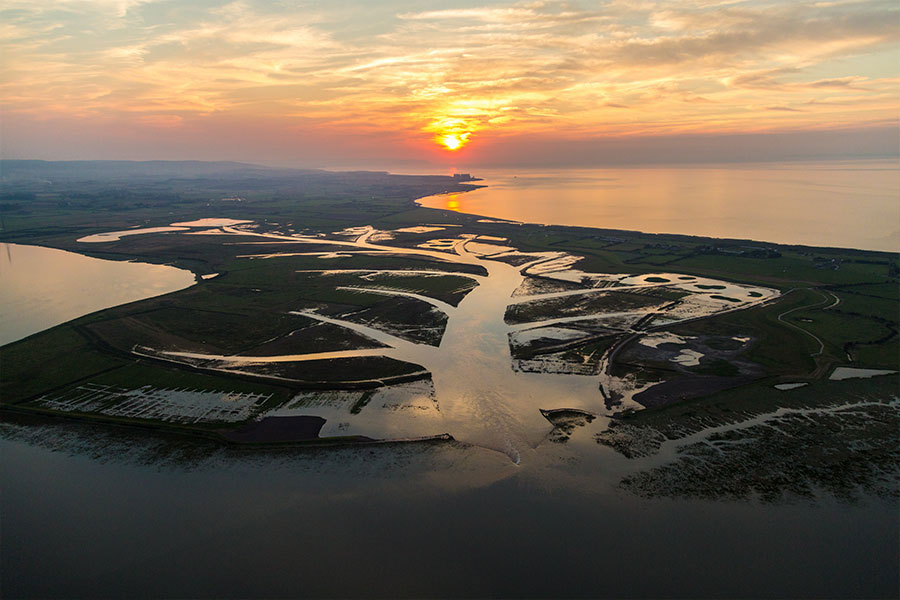 The coastal saltmarsh at Steart
Looking to the past
These approaches have formed the foundations on which we now build our Blue Recovery programme, so as I pulled up at the end of the track to Pawlett, I was eager to see how things were going, and whether it was making a difference.
Pawlett Hams lies just across the River Parrett from Steart Marshes. The name ‘Ham’ means ‘an enclosure at the bend of a river’, and the site is located at the Parrett’s last meander before it disgorges into Bridgwater Bay. It is prime farming country, hosting a fine herd of beef cattle, but at first glance it appears flat and featureless. It’s the last place you’d expect to find anything as exciting as a ghost.
But ghosts are a speciality of Project Officer Antony Bellamy (known to his friends as AJ) – or at least, ghost ponds are. “Places like Pawlett Hams often have a rich past that can help determine their future,” he told me. “I spent many hours online poring over old maps – from some of the earliest ever created by the Ordnance Survey in the late 1800s, right up to the present day. I discovered just how many ponds there used to be in this area. After the war, many were filled in or neglected, and became what we call ‘ghost ponds’. Some of these are prime candidates for restoration.”
Blue oases
Farmland ponds are important habitat for wetland wildlife in the agricultural landscape. Healthy networks of these ponds, at different stages of their ‘lives’, help wetland species move around. As habitat fragmentation increases, they are more important than ever – without them, many native species would struggle to survive. So we’re working with landowners to increase the number of ponds in farmland by helping manage existing ponds to enhance them, and create new waterbodies for a better, more connected rural wetland landscape.
It wasn’t only at Pawlett Hams that AJ and his colleagues discovered ghost ponds but in the whole coastal strip between Bridgwater and Weston-super-Mare, a distance of about 20 miles. As part of their work they began to visit many of the farms concerned and, to their delight, found that some of the ghosts were alive and well in the memories of the people who worked the land.
“Some farmers remembered the ponds we were talking about,” recalled AJ. “One or two said that their fathers had asked them to fill in the ponds decades ago. Many loved the idea of restoring their ghost ponds and putting a lot more life and love into existing waterbodies – they were enthusiastic about the whole process. It was incredibly satisfying.” This sort of cooperation doesn’t arise without the right connections and trust – you can’t just knock on a farmer’s door, your JCB engine revving, and ask them to open their gate. This is where the Farming and Wildlife Advisory Group (FWAG) SouthWest, came in.
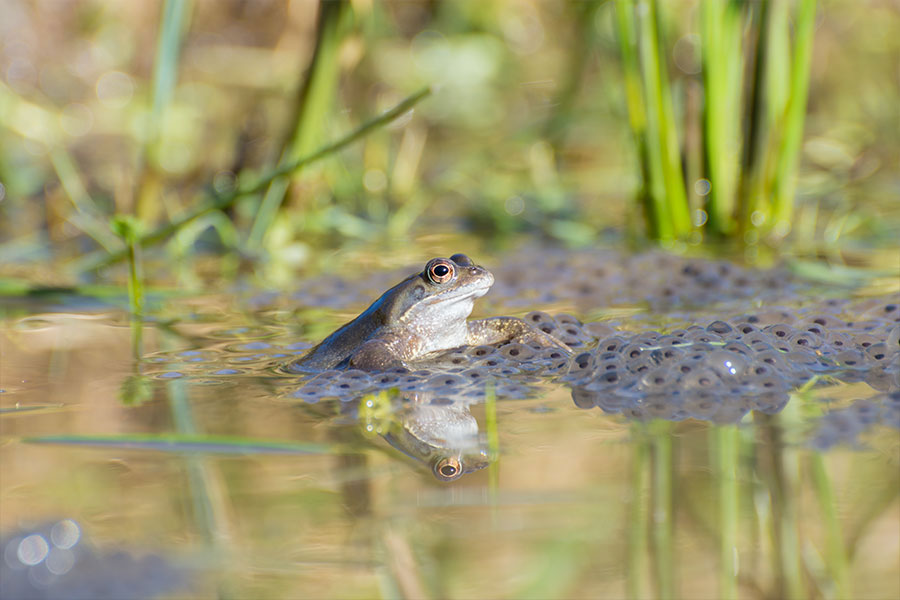 Ponds are important for biodiversity, supporting a wide range of plant and animal life
Ponds for Pawlett
Its team leader, Ben Thorne, has spent his career understanding the needs of farmers and persuading them to engage with conservation. “Every farmer has a driving force,” he says. “Sometimes they immediately buy into conservation efforts, sometimes they don’t. But they do appreciate talking to someone who truly understands what it’s like to farm the land.”
As we talked, we stood by one of the five restored ponds at Pawlett Hams, of which three were ghost ponds. “There’s already a healthy population of great crested newts in there,” says Ben, gesturing. “And you can see the aquatic vegetation is flourishing.”
Landowner Will Barnard, who also acts as the site manager at Pawlett Hams, fizzes with enthusiasm as he surveys the scene. He’s truly a farmer who cares about the benefits to wildlife. He marvels as a flock of cattle and little egrets circles. “Seeing them puts a spring in your step, doesn’t it?” he enthuses. “Here at Pawlett, there are three strands to our work. Firstly, we’ve restored the ponds. Secondly, we’ve put in an electric fence to keep predators such as badgers and foxes at bay, to aid the productivity/nest survival of breeding lapwing and redshank populations. Thirdly, we’re carrying out wider work such as restoring ditches to better manage water levels so that areas of splash flooding in the winter provide safe roosting and feeding habitat for overwintering wildfowl and waders. In spring and early summer, as these areas dry out, they provide wet, muddy margins that are essential feeding habitat for the breeding waders and their chicks.”
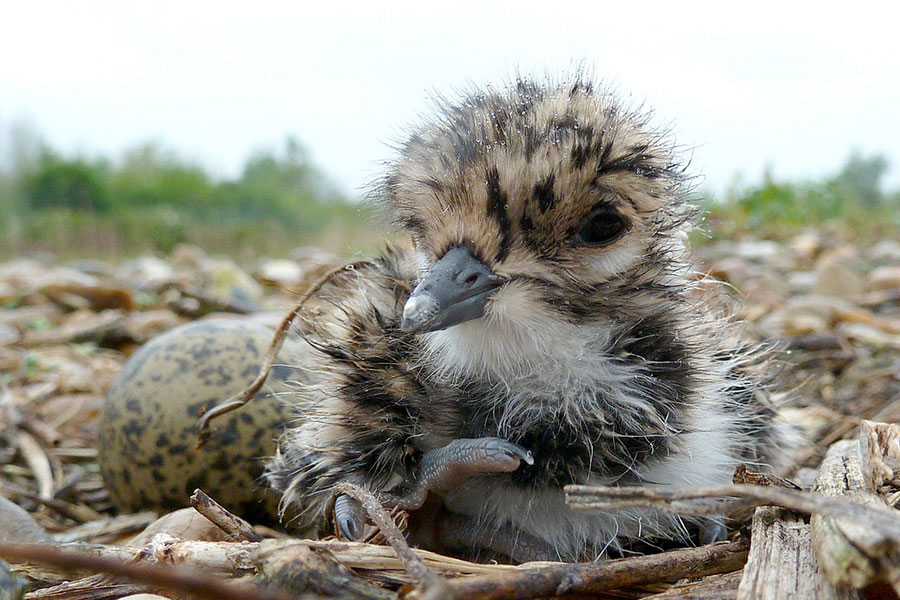 Lapwings are now regularly breeding at Pawlett Hams in Somerset
Bringing back the birds
Both AJ and Will are proud of the progress in just a year. “Thanks to Will’s pioneering work, seven pairs of lapwings regularly breed here – there are no other pairs in the south-west, from the Somerset Levels to Exminster Marshes in Devon. Now the population has more than doubled to 15 pairs,” AJ tells me. “We also have a couple of pairs of redshanks – the first time this species has been recorded breeding here in living memory –and oystercatchers have come and held territory for a while here, too.”
What excited me most about Pawlett Hams was how its achievements and lessons could be expanded elsewhere. “We know the presence of ponds within farmed landscapes kick-starts biodiversity,” says Ben. “And this project could easily be replicated elsewhere, with great effects.”
I was also curious to know how our partners viewed WWT’s role in the scheme. “WWT is a leader in top-class wetland science, creation, management and monitoring,” says Ben. “And more generally in bringing people together. It’s been instrumental in securing much-needed funds from awarding bodies, such as the National Lottery Heritage Fund.”
All of this feels overwhelmingly positive, for everyone – farmers, partners and conservationists. When everybody ‘gets it’, it’s amazing what we can do, together. It gives me enormous hope for the future.
Time for bold moves
There are two words I love when they are put together: ‘wetland’ and ‘creation’. In my past career, I’ve been involved in a number of projects that created significant new wetlands, such as Wallasea Island in Essex. A spirit of cooperation allows these projects to thrive and, importantly, enables decision makers to be bold enough to come onboard. And often it’s the local people who are key.
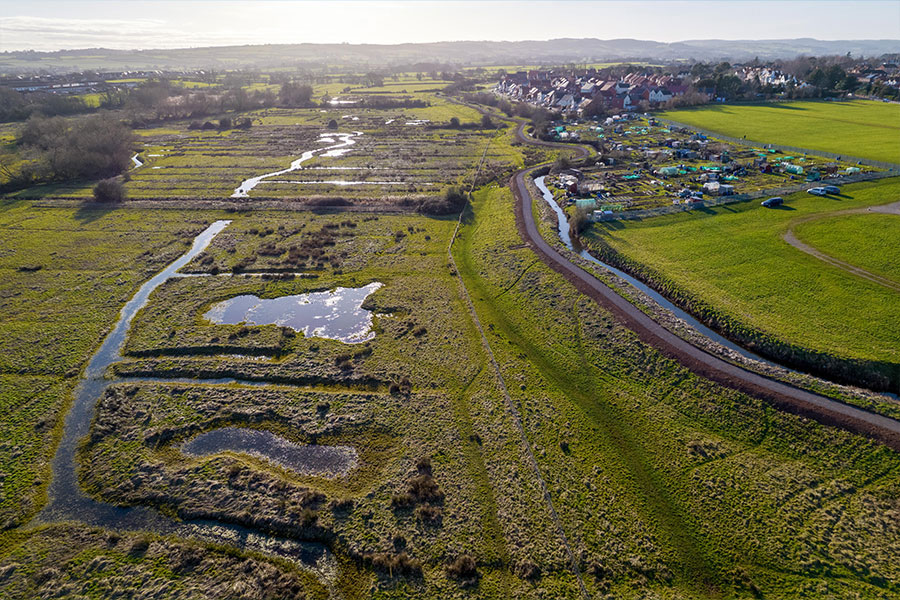
This was particularly striking at the Meads in Bridgwater. This is part of the urban wellbeing strand of the Blue Recovery programme. If you look at a map of Bridgwater, the eight o’clock segment is conspicuously free of buildings. It is an old floodplain marsh; two water courses, Hamp Brook and Durleigh Brook, flow either side of it and into the Bridgwater and Taunton Canal.
Joe May is the Bridgwater Blue Heritage Officer. “Back in the day, they altered the course of Durleigh Brook to the north. Since then the whole Meads in Bridgwater area has been quite dry,” he says. “It was used for grazing and due to ample drainage would dry out completely in the summer.”
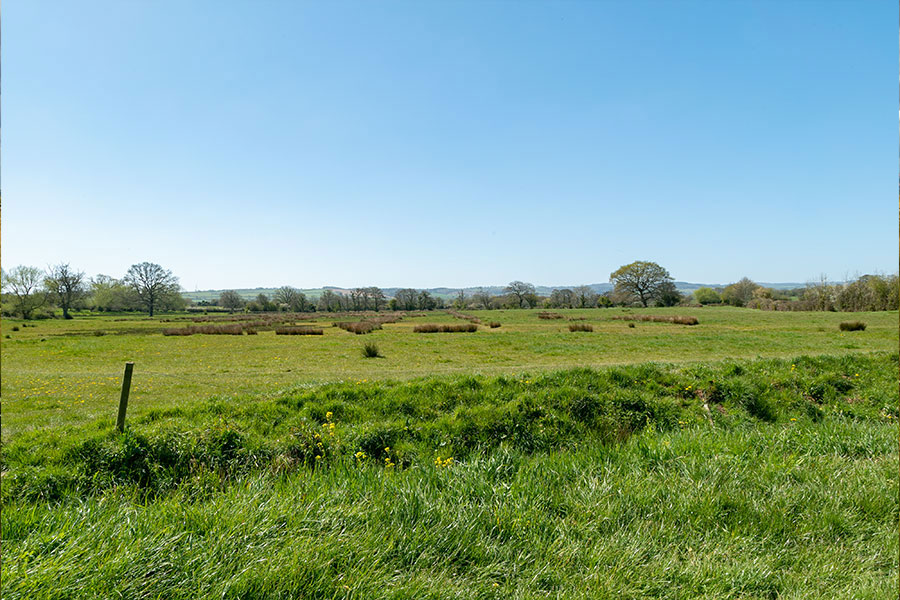
Working alongside the Environment Agency and Sedgemoor District Council with funding from the Green Recovery Fund, WWT has been integral to improving the state of the wetland. “It was obvious that wildlife would benefit from the development of scrapes and reedbeds,” says Joe. “In the future, we plan to do conservation grazing to keep the area open for the birds.”
But the cows are only a part of the restoration. “Early on, we knew that local people would play a prominent role in what happened to the Meads in Bridgwater,” says Joe. “After all, for many of the town’s residents, this is their local open space, a place to come to unwind, to restore their wellbeing. Since they live, work and play here, we wanted them to be part of the wetland restoration.”
One of our hopes at WWT is to get people in their millions taking action for wetlands. And one of the ways to do that is to bring wetlands to them, in every sense. So the Bridgwater Blue Heritage Project was launched at a public meeting, where the overall plan – to improve the Meads as a wetland and potentially alleviate flooding – was aired, and an appeal was made for volunteers to become involved. Together we have developed with the community a bluer future for the site that recognises how places like this can help people build resilience for the future.
People power
As somebody who has worked with volunteers on many occasions, I know that conservation projects often attract wonderful, committed and passionate people, like Steve Webber and his partner, who rejoices in the name of Stan the Man. During lockdown, they took an online ecology course that fuelled their desire to help out in their local area.
“We come down to the Meads every month to carry out a variety of tasks,” Steve tells me. “By setting up acoustic monitoring kits, we’ve helped find out what rare bat species are present. So far, we’ve recorded 10 species, including Daubenton’s and pipistrelle bats.”
Steve and Stan are proud of the reedbeds they helped plant. Overall, more than 1,000 plants were sown in the wetter parts of the site. “It was good fun,” they tell me. “We all got very muddy.”
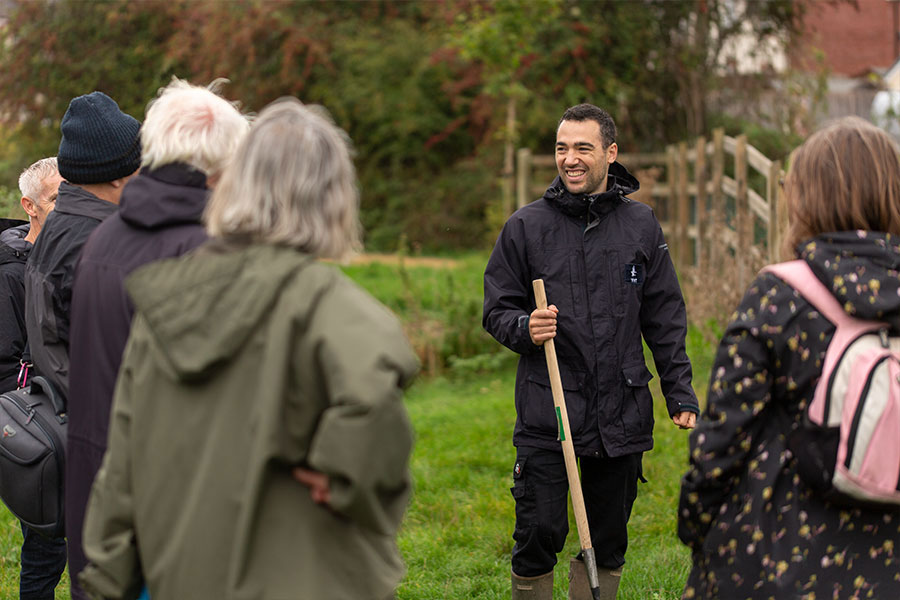 Volunteers have been key to the success of the Meads at Bridgwater conservation project
“We’ve enjoyed being involved from the start, and seeing the changes every time we come,” says Steve. “Improving the footpaths around the site has given more local people better access.”
Steve and Stan are perfect examples of volunteers who have become immersed, quite literally, in wetland regeneration. You don’t have to talk to them for long to see that the Meads project has supported their wellbeing as much as it has benefited from their commitment.
“I just love coming here and being outside among nature,” muses Stan. Whether you’re a member, a volunteer or the Chief Executive of WWT, I think that’s something we can all agree on.
Four ways to a Blue Recovery
1 Blue carbon
Our work to highlight the potential of wetlands to store carbon started with Steart – now we’re making the business case for Blue Carbon on a national scale.
2 Flooding
We’re helping make the case for nature-based solutions to flooding, with communities at heart.
3 Urban wellbeing
The Bridgwater Blue Heritage project is creating new urban wetlands and developing a Blue Prescribing programme to connect local communities with wetlands.
4 Water quality
We’re developing wetland solutions, such as treatment wetlands, to improve water quality, particularly nutrient pollution.
Find out more
Discover our Climate Resilience work creating and restoring 130 hectares of wetlands along the Somerset coast.
Click here to read all about it