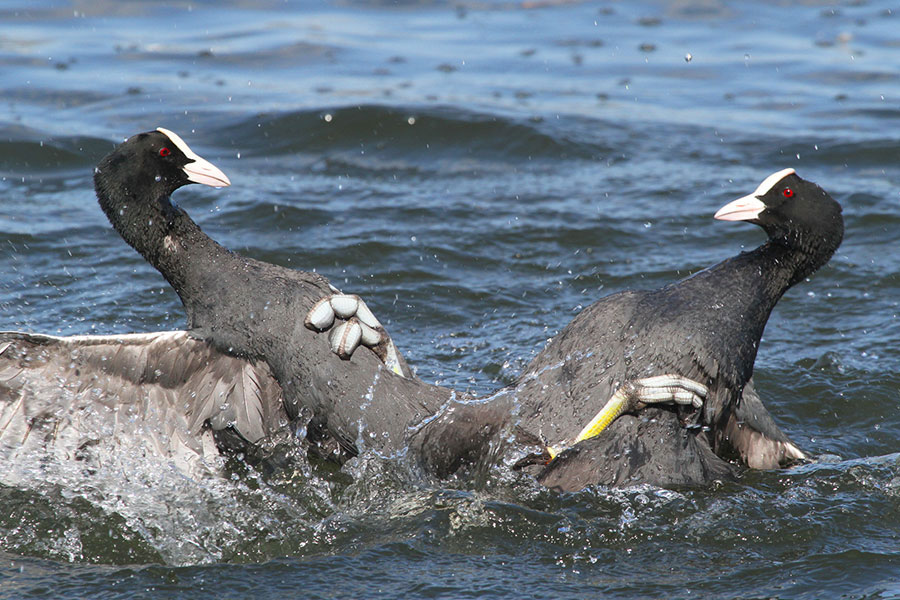
Coots are fantastically accessible and charismatic – and make rewarding subjects for anyone who wants to explore bird photography. Present across most of the UK – and used to people at WWT centres – they are highly territorial. Their explosive displays and plucky characters can be enjoyed at almost any time of year. I often just sit and watch them on my local lakes so I am prepared for when and where the conflicts/nesting behaviours will occur.
There’s no time of year when coots will not participate enthusiastically in some territorial aggression. Such fights can flare up and end in an instant, or they can persist for up to a minute, which can be great if you’re trying to photograph this explosive behaviour. In my experience, the peak month for displays tends to be April, but the depths of winter are no reason to take a day off. To capture the falling snow, I positioned my camera as close as possible to the water level to make the snowflakes visible against a dark, forested background. A higher perspective would have rendered them virtually invisible.
Like all animals, coots experience and display a wide range of complex emotions. While they may be best known for their feisty territorial defence, they also have a tender side to their characters. Breeding pairs like this will often have affectionate moments with each other and with the chicks to come, which they will both help to raise. It is important to try and capture as many different aspects of your subject’s character and behaviour as possible. Breeding may start as early as February or March.
This coot is diving for freshwater clams. This image captures the exact moment its bill breaks the water surface. When trying to capture action like this, remember that anticipation is faster than reaction. Had I waited to press the shutter until I saw the coot begin to dive, I would’ve missed the shot. By investing time watching and learning about the bird, I was able to predict this decisive moment by recognising the coot’s subtle pre-dive posturing.