
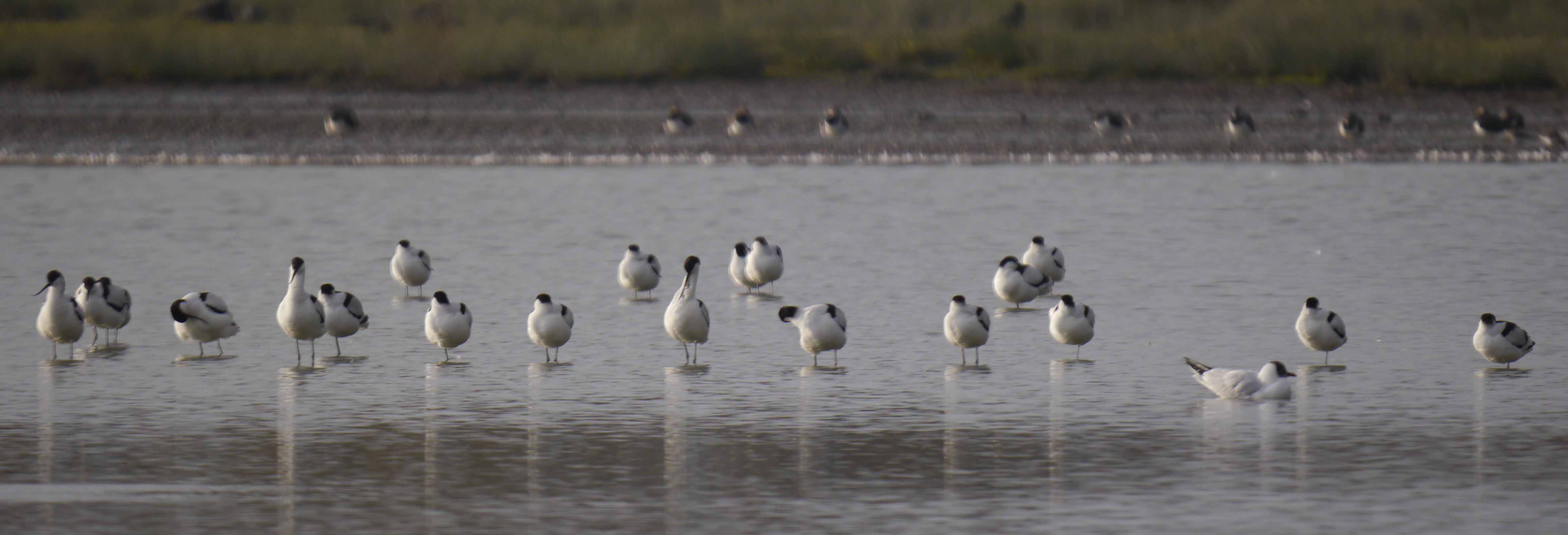
Returning Avocets (below) are a 'sign of spring' feature at this time of year, they tend to come and go with cold weather events, the forecast suggests they may be facing a period of icy mornings which may move them to the Severn estuary/Bristol channel. This picture was taken this morning on South Lake, the flock had increased to 24. Also note the Black-headed Gull in breeding plumage.
South Lake
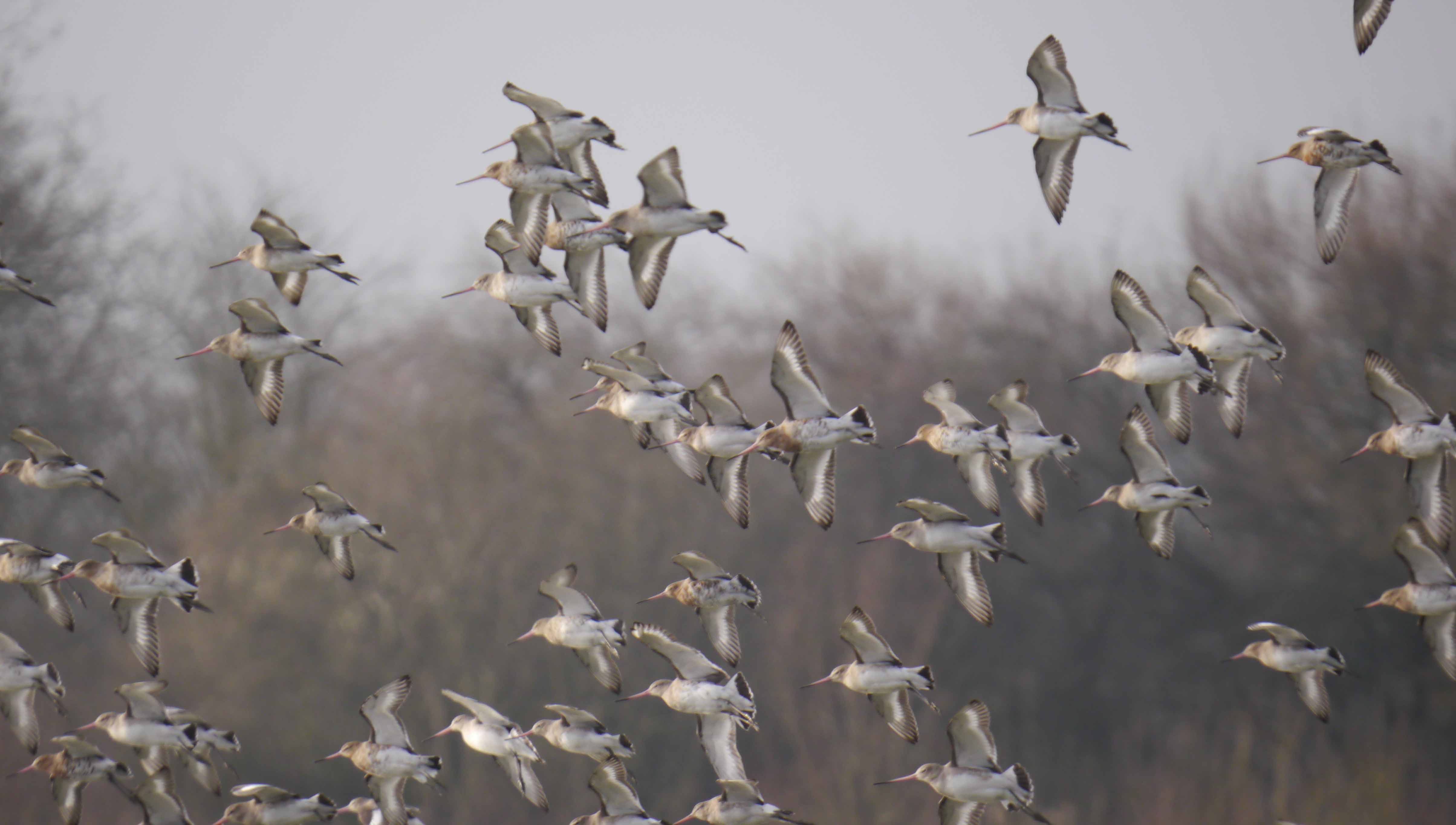
24 Avocet, 126 Black-tailed Godwit, 10 Snipe (NE corner of wader scrape), 12 Dunlin, 3 Little Stint (on the central islands), 300 Lapwing, 45 Pochard, 50 Tufted Duck, 10 Cormorant, Great Crested Grebe, 8 Gadwall, 40 Teal.
A few Black-tailed Godwits are turning red/orange as they moult into breeding plumage.
Rushy Hide and Peng Observatory
75+ Bewick's Swan at 0815am, 88 still on site. 90 Pintail, a Redshank and 120 Lapwing.
Zeiss Hide
360 Wigeon, 110 Teal, 2 Bewick' Swan, 2 Oystercatcher, 230 Lapwing and 8 Redshank. c50 E. White-fronted Geese flew over and landed on the Dumbles. Two Cranes were feeding on the Dumbles and a Buzzard was in the hedge.
Kingfisher Hide
600 Golden Plover, 400 Lapwing, 200 Dunlin and two Skylark in the ploughed field (Four Score), one of which was singing. Also a male Reed Bunting was singing.
General
Singing Chaffinch, Dunnock, Song Thrush were all heard, drumming Great-spotted Woodpecker in the Spinney Wood near Zeiss Hide. A male Greenfinch was singing in the car park with a party of 5 noted here.